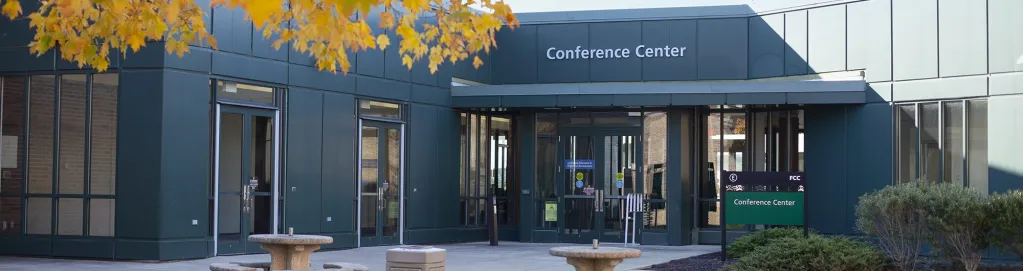
At MACEM&PS, we’ve somewhat recently begun talking about ourselves as operating in
the realm of “entrepreneurial higher education,” which certainly sounds nice…but it’s
worth taking a moment to consider more thoroughly what that new label truly conveys.
As with most sound-nice concepts, the true definitions can be variable – beauty being
in the eye of the beholder and whatnot. The answer to “okay, you’re in entrepreneurial
higher education; what does that actually mean?” depends on the person you ask, the
day of the week, the time, and the environment.
The possibilities are numerous. The most common, not in any order of priority, include:
- A field of academic study aligned with business;
- A philosophy for higher education indicating a global perspective;
- Creative, novel, and/or innovative college and university programs or projects;
- A higher education management theory that encourages innovation, partnerships, and community engagement;
- A higher education revenue-generating philosophy that is founded in supporting academic program(s), academic disciplines, the institution, and community, in collaboration with the real world.
To cut to the chase (in keeping with the old sayings), we are embracing the last one
on the list. The Mid-Atlantic Center for Emergency Management & Public Safety (MACEM&PS)
focuses on an adventure that broadens the service reach of a local community college to a national market, and
supports revenue, image, status, academic quality, community involvement, and discipline
integration. Utilizing the expertise of an academic program to deliver grant-funded outcomes and
consulting contracts is a significant financial resource to the institution. While
most major institutions have at least considered research as a first step into this
world, along with federal and state grants, few have overcome the higher education
risk-averse mindset to enter the professional services and consulting realms.
The MACEM&PS has taken the entrepreneurial effort forward to an Optimal Performance
Service Model. It is through this model that our learners perform best in the classroom
and in the field. The integration of formal education, our student and partner base,
and professional training and experience enhances the skills and mindsets of our instructors
and their students. It further offers new tools; field innovations; participatory,
relevant learning experiences; and exposure to today’s industry professionals from
a variety of disciplines. Where we began, where we are today, and where we are headed
provides evidence of solid business innovation and leadership.
How did we evolve from MACEM to the MACEM&PS at Frederick Community College?
Now that the perspective is established, the foundation of the MACEM&PS at Frederick
Community College (FCC) in Maryland is clear. The MACEM&PS is first the academic department at a community college that provides higher education in
criminal justice, emergency management, fire service administration, geographic information
systems, national security and intelligence, legal studies, police science, and public
safety disciplines. The revenue-generating efforts of the department work as supplementary
elements, focused on supporting the quality and currency of higher education for public
safety disciplines. It is, after all, one thing to just teach the concepts and hire
expert instructors to explain how they affect the world; it’s quite another to have
that industry connection alive, ongoing, and in-house.
The entrepreneurial path of the department began in 1999 with the opportunity to subcontract
with an engineering firm supporting the Federal Emergency Management Agency (FEMA)
Independent Study Program. FCC agreed to evaluate existing FEMA Independent Study
courses for potential academic credit awarded by the College, and this credit conversion
program is nearing its 25th year as an income stream to the College. In 2004, the
College established a remote learning Associate of Applied Science Degree in Emergency
Management for a national audience, enhanced by the department’s entrepreneurial reputation
in the discipline. However, the pathway was often as much opportunity as design. The
concept of revenue-generation born in FEMA grant opportunities led to the creation,
in 2010, of the Mid-Atlantic Center for Emergency Management (MACEM). By 2012, the
degree and connection to FEMA brought an award for a three-year national training
effort in situational analysis for complex attacks. This successful effort was followed
in 2014 and 2018 by two more three-year national training efforts in public-private
partnerships and community lifelines in emergency response and recovery.
With the addition of more public safety domains to emergency management in 2022, professional
services to the disciplines expanded in our consulting domains, and “Public Safety”
was added to our name. Then began the focused development of the revenue-generating
program in both the form of grants and professional services consulting. The MACEM&PS
strategic plan, developed by a global stakeholder group and implemented by dedicated
academic and professional services faculty and staff, projects our work into the future.
Who are we?
The MACEM&PS is a true collective of academic and professional staff including full-time
and adjunct faculty, higher education administrators, staff, and most importantly,
a dedicated team of stakeholders. The MACEM&PS is supported by the FCC administration,
which encourages the entrepreneurial effort and has overcome the risk-averse perspective
of many higher education institutions, supporting the expansion and growth of the
MACEM&PS.
Like most academic departments, the MACEM&PS has full-time and adjunct faculty supported
by program managers and staff. Additionally, the MACEM&PS has specialists in instructional
design, technology, quality control, credit conversion, and grantsmanship, along with
its revenue- generating professional services. The MACEM&PS takes pride in its 15-member
integrated team – with both program and global focus – supporting all activities.
The adjunct faculty are important stakeholders, and valuable resources, for both our
academic and professional services work. The adjuncts can accept short-term grant
and consulting assignments that allows the MACEM&PS to expand, and contract, like
the incident command concept, allowing us to have standby personnel.
What do we do?
The breadth of professional services continues to expand as opportunities present
themselves. The MACEM&PS currently serves FEMA, the Department of Justice, and the
Naval Postgraduate School on the national level along with the Maryland Department
of Emergency Management, the Maryland State Police, the Maryland State Department
of Education, and the Maryland Center for School Safety at the state level. We also
serve local government agencies and organizations in the private sector. The portfolio
of services expanded with two contracts with the national Society of Fire Protection
Engineers to provide cutting-edge content to address one of the nation’s top five
hazards – wildfires. The range of products includes customized training academic programs,
feasibility studies and needs assessment, policy development, program evaluation,
and temporary staffing. Temporary staffing for state agencies includes graphic and
web design, conference support, short-term program needs, public relations, and operational
support.
The rewards!
The primary purpose of the professional services activities is the support of the
academic program and the College, providing exposure to progressive, national content
and experts as well as high demand services. While the most obvious tangible reward
is additional income for the College from grants and contract services, the contribution
of maintaining an extended network with discipline experts and community and political
leaders enhances the reputation of the College and the MACEM&PS. This extended networking
contributes to our adjunct faculty pool, our currency and experience in the disciplines,
stakeholder outreach, and community support.
With emerging discipline knowledge and technology, the professional services activities
allow the use of funding from grants and contracts to enhance the knowledge and quality
of our academic programs – for both the benefit of the student and instructor. The
MACEM&PS interaction with national, regional, state, and local public sector leaders
contributes to the reputation and quality recognition of the College and the Center.
Finally, the MACEM&PS is better positioned to offer support and service to the College
and the community because of revenue and the external recognition of the Center. The
Center is active with the FEMA Higher Education Program and other associations promoting
the quality of higher education.
The MACEM&PS also stands ready to assist the College and other FCC departments to
explore the benefits of entrepreneurial activities.

The future?
With many challenges on the horizon for higher education institutions including enrollment
challenges, reduced funding sources, evolution of learner expectations, and the public’s
perception of higher education, the enhancement of entrepreneurial higher education
offers potential solutions to most of the issues. The MACEM&PS with the support of
FCC will continue its planned controlled growth in scope and revenue. However, the
future products of higher education are closer than most people realize.
Planned growth in higher education can be challenging as concept approval and subsequent
return on investment are not immediate. The inspiration of a novel idea to release
of product with an active revenue yield takes years and realistically at least two
fiscal budget years to fund development and see a return on investment. Planning for
the next fiscal year now is too late. New programs and products involve an awareness
of the strategic, and lengthy, process and approval timelines.
The cyclic nature of higher education supports a controlled program growth plan. Although
we all want to see entrepreneurial revenue flourish, there is a need to manage expectations
by monitoring revenue spikes that might be anomalous headed to market saturation,
while predicting how and when the market will level to produce sustained, controlled
growth.
This entrepreneurial concept offers higher education a method to enhance academics,
community service, and program networking, which results in an increase of the quality
and reputation of the institution in a sustainable manner.
Now that the realities of the present and the processes of the future are covered,
the MACEM&PS Optimal Performance Service Model will evolve. Next on the horizon for
official release in July 2025 is the MACEM&PS Learning Lab. Our learners are changing
along with their needs and timely expectations of service support they want to receive
from higher education. The MACEM&PS will release on-demand, remote learning, tiered
content in support of these expectations in three areas: 1) Quick hit skill and concept
introductions & refreshers; 2) Professional training – more expansive coursework
on specific topics of industry need; and 3) Even more extensive coursework designed
for translation to college credit here at FCC, offering a new, lower-stakes doorway
into higher education for those who might not think it’s for them.
Microlearning offers emerging concept and skills, quick keys to knowledge, with infusion
of smaller learning segments into more advanced programming for those who are building
a larger academic portfolio.
The MACEM&PS Learning Lab is a solid example of entrepreneurial work in higher education.
From the first academic year of product inspiration to the request for innovative
funding, development, marketing, and release, the return on investment is anticipated
in year two and beyond.
Entrepreneurial higher education – yes, it is of great value to the learners, faculty,
agencies, communities, and disciplines served as well as to the institution itself.
Evolve with us, and know that we are most happy to talk with you about our efforts
and to share support for those who follow in our footsteps.
Links for Reference & More Learning, if you’re that way inclined:
https://www.quora.com/If-we-are-to-go-by-the-saying-beauty-is-in-the-eyes-of-the-beholder-then-why-are-some-people-considered-beautiful-and-others-ugly
https://www.kauffman.org/wp-content/uploads/2019/12/entrep_high_ed_report.pdf
https://www.researchgate.net/publication/297754981_Higher_Education_As_A_Pathway_To_Entrepreneurship
https://knowledge.essec.edu/en/society/understanding-entrepreneurial-university.html
https://innovatusmagazine.com/supporting-the-academic-enterprise-entrepreneurial-new-revenue-streams-for-your-college/
https://knowledge.essec.edu/en/society/understanding-entrepreneurial-university.html#:~:text=Higher%20education%20institutions%20have%20a,academic%20knowledge%20into%20tangible%20outcomes.
https://www.touchnet.com/trends/blog/2024/08/13/9-reasons-why-you-should-develop-alternative-revenue-sources-on-your-campus
https://www.touchnet.com/trends/blog/2024/08/20/identifying-alternative-revenue-streams-for-higher-education
https://www.frederick.edu/
https://www.frederick.edu/programs/public-safety.aspx
https://macem.org